Early Pregnancy Symptoms vs Miscarriage Signs: What's Normal?
Spotting, cramping, and nausea changes can all happen in healthy pregnancies. This guide explains which symptoms are normal and which warrant a call to your provider.
Quick Answer
Light spotting (implantation bleeding) and mild cramping are common in healthy early pregnancies. Heavy bleeding with clots, severe one-sided pain, or rapidly decreasing pregnancy symptoms warrant urgent evaluation. When in doubt, call your provider. This list is context, not diagnosis.
Early pregnancy symptoms and miscarriage signs overlap more than most people realize, and the internet rarely helps you tell them apart. Spotting that looks like the start of a period. Cramping that feels like period pain. Nausea that suddenly disappears. Any of these can send a newly pregnant person down a terrifying search spiral.
The reality is nuanced: most symptoms that sound concerning are completely normal, and a smaller set of symptoms that seem minor can warrant evaluation. This article explains what the research says about common early pregnancy experiences.
Normal Symptoms in Early Pregnancy
Light spotting (implantation bleeding)
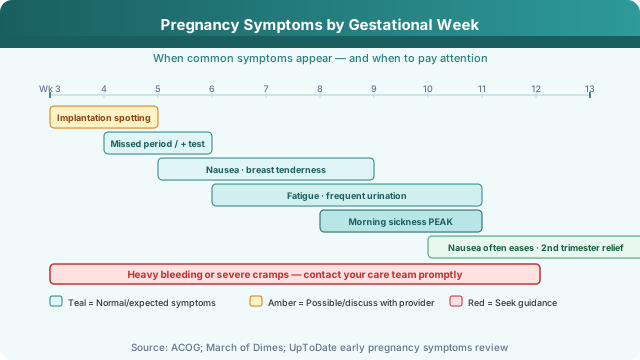
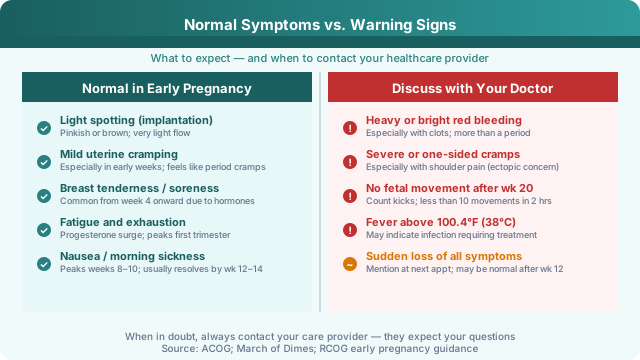
About 25–30% of pregnant women experience spotting in the first trimester, and most of these pregnancies continue normally. The most common cause is implantation: the embryo burrows into the uterine lining around days 10–14 after ovulation. Implantation bleeding typically appears as light pink or brown spotting, lasts 1–3 days, and is lighter than a normal period.
Spotting can also occur after cervical irritation (during a vaginal exam or after sex), due to a subchorionic hematoma (a pocket of blood near the placenta that usually resolves on its own), or for no identifiable reason. Not all spotting is meaningful, and not all spotting requires intervention.
Mild cramping
Uterine cramping (often described as similar to menstrual cramps) is common in early pregnancy as the uterus expands and the ligaments supporting it stretch. Round ligament pain, which can be sharp and one-sided, typically begins in the second trimester but sometimes starts earlier.
Mild, bilateral (both-sided) cramping without bleeding in a confirmed intrauterine pregnancy is generally not concerning. It does not require bed rest, activity restriction, or treatment.
Nausea and vomiting
Morning sickness affects 70–80% of pregnant women, usually beginning around week 5–6 and peaking at weeks 8–10. It is often (misleadingly) associated with healthy placental development and high hCG levels. However, the absence of nausea does not mean a pregnancy is failing. About 20–30% of women never experience significant nausea, and their pregnancies are not at increased risk.
A sudden cessation of pregnancy symptoms that was previously present can be worth noting, but by itself it is not reliable evidence of pregnancy loss. Symptoms often fluctuate week to week as hCG levels plateau.
Symptoms That Warrant a Call to Your Provider
Heavy vaginal bleeding
Bleeding heavier than a light period (filling a pad or more in an hour, or passing clots) warrants same-day evaluation. Heavy bleeding does not always mean miscarriage; subchorionic hemorrhage can cause significant bleeding while the pregnancy continues. It requires an ultrasound and possibly an hCG level to evaluate.
Severe, one-sided pelvic pain
Sharp, severe pain on one side of the pelvis, especially accompanied by shoulder tip pain (referred pain from blood pooling under the diaphragm), dizziness, or fainting, raises concern for ectopic pregnancy. An ectopic pregnancy (one implanted in the fallopian tube rather than the uterus) is a medical emergency. If you have these symptoms, go to an emergency department immediately.
Passing tissue or clots
Passing visible tissue or large clots from the vagina is a sign that a pregnancy may be actively miscarrying. Save any tissue in a clean container so your provider can examine it to confirm miscarriage and check completeness.
Fever with pelvic pain
Fever combined with pelvic pain and vaginal discharge suggests possible infection. Septic miscarriage (infection of a retained pregnancy) is rare but serious and requires urgent treatment.
The "Threatened Miscarriage" Diagnosis
When a patient presents with first-trimester bleeding but an ultrasound confirms a viable intrauterine pregnancy (heartbeat present, fetal development appropriate), the clinical term is "threatened miscarriage" or "threatened abortion." Despite the alarming name, about 50% of threatened miscarriages go on to successful delivery.
A threatened miscarriage diagnosis does not change your actual risk from what it would be based on your week, age, heartbeat status, and history. You can check your personalized estimate using our miscarriage risk calculator. Women with this diagnosis are often told to rest, though there is limited evidence that bed rest changes outcomes.
What Disappearing Symptoms Actually Means
For about 1 in 3 pregnant women, the most anxiety-inducing symptom is the sudden disappearance of nausea or breast tenderness. Here is the honest data: symptom changes in the first trimester are highly variable and are not reliable indicators of ongoing viability.
hCG levels, which drive most early pregnancy symptoms, plateau and then begin to decrease around weeks 10–12 as the placenta takes over progesterone production. Most women notice symptom improvement around weeks 10–12 even in completely healthy pregnancies. Earlier symptom fluctuation is also common; nausea intensity can vary by 30–50% from one day to the next without any change in pregnancy status.
An ultrasound showing a heartbeat and appropriate growth is the only reliable way to confirm ongoing viability. Symptoms alone (including their presence or absence) are not reliable.
When to Seek Emergency Care
Regardless of bleeding or other symptoms, seek emergency evaluation immediately if you have:
- Severe abdominal pain that is constant, not crampy
- Shoulder tip pain (sharp pain at the very tip of the shoulder blade)
- Fainting, dizziness, or feeling like you might pass out
- Fever above 100.4°F (38°C) with pelvic pain
These may indicate ectopic pregnancy or septic miscarriage, both of which require emergency care.
For context on your personal risk factors and how they combine, our miscarriage risk calculator provides a personalized estimate. For understanding what a chemical pregnancy is versus an early miscarriage, our comparison article explains the distinction.
Tracking Symptoms Without Spiraling
There's a difference between noticing your body and monitoring it for signs of failure. The first is useful context for your provider. The second teaches your nervous system that every twinge is a threat, which drives anxiety up without improving outcomes.
If you want to keep a simple log, these 4 items are worth recording:
- Bleeding episodes: date, color (pink, brown, red), and volume (spotting on tissue, a few drops, filling a pad)
- Pain episodes: where it is, how long it lasts, and whether rest or heat helps
- Fever: any reading at or above 100.4°F (38°C)
- Symptom absence lasting 48+ hours: for example, nausea that was daily and is now gone
That's it. A 30-second entry once or twice a day is enough to give an accurate picture if you need to describe what's happened.
What is not worth logging: every hourly nausea check, every dozen wipes looking for spotting, every mild twinge, or repeated hCG home tests after week 6. Testing hCG at home after a confirmed heartbeat is almost never useful. Levels plateau and then drop by 30–50% between weeks 10 and 12 in completely healthy pregnancies, and the drop frequently gets misread as a loss.
Call your provider same-day for: bleeding that fills a pad in an hour or less, passing clots larger than a quarter, one-sided pelvic pain that doesn't ease with rest, fever above 100.4°F with pelvic pain, or shoulder-tip pain. These are the 5 symptoms worth acting on immediately.
Wait for your next appointment for: light pink or brown spotting without pain, mild bilateral cramping, symptom fluctuation day to day, breast tenderness changes, and tiredness that shifts week to week. These are the roughly 1 in 3 early pregnancies where something mildly unusual happens and the pregnancy continues normally.
If you find yourself checking more than 3 or 4 times a day, that's a sign the tracking itself has become the problem. At that point, hand the log to a partner or close the app. You can still call your provider if a real change occurs. You don't need a spreadsheet to notice heavy bleeding. For practical strategies on reducing the checking loop, see our guide on first-trimester anxiety.
Sources: Hasan R et al. (2010). Patterns and predictors of vaginal bleeding in early pregnancy. Annals of Epidemiology. Doubilet PM et al. (2013). Diagnostic criteria for nonviable pregnancy early in the first trimester. NEJM. ACOG Practice Bulletin No. 200 (2018).