Recurrent Miscarriage: Causes, Testing, and What Comes Next
Recurrent pregnancy loss affects about 1% of couples. This guide covers the known causes, the standard diagnostic workup, and the prognosis after three or more losses.
Quick Answer
Recurrent pregnancy loss (RPL) is defined as three or more consecutive miscarriages before 20 weeks. A cause is found in roughly 50% of cases: most commonly chromosomal, uterine, or immunological. In the remaining 50%, no identifiable cause is found, but 60–75% of couples with unexplained RPL still achieve a live birth in a subsequent pregnancy.
Recurrent miscarriage (what clinicians call recurrent pregnancy loss or RPL) affects about 1% of couples trying to conceive and demands investigation rather than reassurance. One loss is heartbreaking. Two begins to feel like a pattern. Three or more crosses the threshold where most guidelines call for a full workup. If you're in this position, you deserve answers, or at least honest acknowledgment of where the science currently stands.
This article covers the known causes of RPL, what a standard diagnostic workup looks like, and what the data says about outcomes after evaluation.
Defining Recurrent Pregnancy Loss
The American College of Obstetricians and Gynecologists (ACOG) and the European Society of Human Reproduction and Embryology (ESHRE) define RPL as two or more pregnancy losses before 20 weeks. Three losses is the traditional threshold for full evaluation, though two losses in women over 35, or two losses with an identifiable pattern, often warrant earlier workup.
Roughly 1–2% of couples trying to conceive experience RPL. About 15–20% of recognized pregnancies end in single losses, but the probability of three consecutive losses by chance alone is less than 1%, which is why clinical investigation is appropriate rather than attributing it to bad luck.
Known Causes of RPL
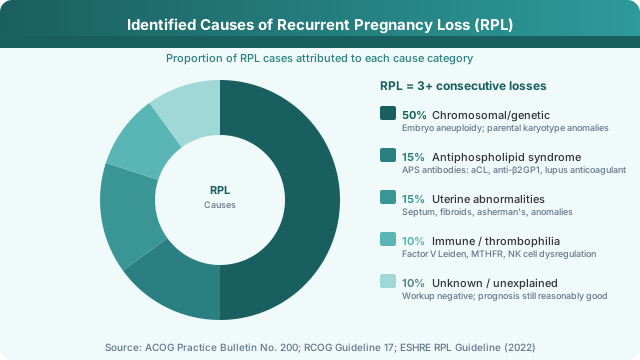
A cause is identified in approximately 50% of RPL cases. Here are the main categories:
Chromosomal abnormalities (~50–60% of individual losses, lower in RPL patterns)
Most individual miscarriages are caused by chromosomal errors in the embryo. In RPL, random chromosomal errors are less likely to explain the pattern than in a single loss. However, one or both partners may carry a balanced chromosomal translocation (a structural rearrangement where genetic material is swapped between chromosomes). The total amount of DNA is normal, so the carrier is unaffected, but a fraction of eggs or sperm receive unbalanced chromosomal sets, resulting in repeated losses.
Uterine structural abnormalities (~10–15% of RPL cases)
A uterine septum (a wall of tissue dividing the uterine cavity) is the most common structural cause of RPL. Septums can reduce blood flow to an implanting embryo. Other structural causes include submucosal fibroids (benign tumors protruding into the cavity), Asherman's syndrome (intrauterine adhesions, often from prior surgery), and bicornuate or arcuate uterus. Most structural issues are identified by hysteroscopy, saline-infusion sonography, or MRI.
Antiphospholipid syndrome (APS) (~5–15% of RPL cases)
APS is an autoimmune condition where the immune system produces antibodies (anticardiolipin antibodies, lupus anticoagulant, anti-beta2 glycoprotein I) that interfere with normal placental function. It is one of the few treatable causes of RPL: low-dose aspirin plus low-molecular-weight heparin (LMWH) during pregnancy significantly reduces loss rates in women with APS. Testing requires two positive results at least 12 weeks apart to confirm.
Thyroid dysfunction (~5–10% of RPL cases)
Both hypothyroidism and hyperthyroidism affect implantation and early placental development. Subclinical hypothyroidism (TSH above 2.5 mIU/L) is now recognized as a possible RPL contributor, and most specialists treat to a TSH target below 2.5 mIU/L in women with RPL. Simple thyroid function testing (TSH, free T4) is included in all standard RPL workups.
Other causes
Diabetes (poorly controlled), inherited thrombophilias (factor V Leiden, prothrombin gene mutation), and luteal phase deficiency have been proposed as RPL causes, though the evidence for inherited thrombophilias and luteal phase deficiency is mixed. Progesterone supplementation is often used empirically even where the evidence for benefit is not definitive, given its low risk profile.
The Standard Diagnostic Workup
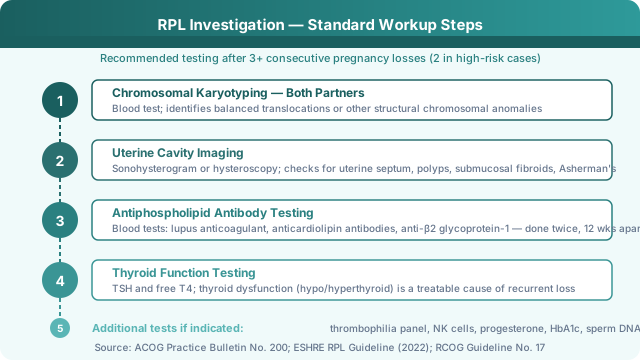
If you have experienced two or more losses, the following tests are typically ordered:
- Karyotyping of both partners (peripheral blood chromosomes): looks for balanced translocations
- Antiphospholipid antibody panel (anticardiolipin antibodies, lupus anticoagulant, anti-beta2 glycoprotein I)
- Thyroid function (TSH, free T4)
- Uterine evaluation (saline-infusion sonography, office hysteroscopy, or pelvic MRI)
- Hormonal evaluation (fasting glucose, prolactin, day-3 FSH/LH/estradiol if relevant)
If products of conception from the losses are available, chromosomal analysis of the lost pregnancy tissue (conceptus karyotyping or microarray) can determine whether the loss was chromosomally abnormal. This is valuable information: if three losses all show different chromosomal abnormalities, that suggests bad luck rather than a maternal cause.
Unexplained RPL: What the Prognosis Looks Like
Half of RPL cases have no identifiable cause after full workup. This is frustrating, but the prognosis is not as bleak as the history might suggest.
Studies of women with unexplained RPL show live birth rates of 60–75% in subsequent pregnancies without any specific treatment, including women with three, four, or five prior losses. The live birth rate is somewhat lower in women over 40, where chromosomal factors are more likely to be at play, but still meaningful.
Progesterone supplementation (vaginal progesterone from the time of positive pregnancy test) is increasingly offered empirically in women with unexplained RPL, based on the results of the PROMISE and PRISM trials. The PRISM trial (2019, N=4,153) found a modest but significant improvement in live birth rates in women with a history of three or more losses. The benefit was most pronounced in women with bleeding in early pregnancy.
Finding the Right Specialist
RPL evaluation should ideally involve a reproductive endocrinologist or a maternal-fetal medicine specialist with RPL experience. Not all OB/GYNs are trained in the full RPL workup or familiar with newer evidence-based treatments.
After your diagnosis, our miscarriage risk calculator can help you track how your personal risk estimate changes week by week in a subsequent pregnancy. The prior-loss multiplier in the calculator reflects the elevated risk from prior losses, but a confirmed heartbeat and increasing gestational age still shift the numbers meaningfully in the right direction.
If you have been through RPL and are navigating a new pregnancy, our article on trying again after miscarriage covers timing, monitoring, and what to expect emotionally and clinically.
What to Bring to a Specialist Consultation
Coming prepared to your first RPL appointment can compress 2 or 3 visits into 1. Specialists work from hard data, not impressions, so the more documentation you bring, the faster the workup moves.
Records to gather ahead of time:
- Exact dates of each pregnancy loss (conception date or LMP, and date loss was confirmed)
- Gestational age at each loss, measured in weeks and days
- Whether a heartbeat was seen, and at what gestational week
- Copies of every early ultrasound report from each pregnancy
- Any tissue testing (products of conception karyotype or microarray) from prior losses
- Results of any bloodwork already done: especially TSH, prolactin, fasting glucose, and antibody panels
- Your own medical history: thyroid disease, autoimmune conditions, diabetes, prior surgeries on the uterus or cervix
- Your partner's medical history: known genetic conditions, family history of miscarriage or infertility
- Current medications and supplements, including dosages
Tests to ask about by name:
Ask specifically about parental karyotyping, the full antiphospholipid antibody panel (anticardiolipin, lupus anticoagulant, anti-beta2 glycoprotein I) with a 12-week confirmatory repeat, TSH plus free T4, and uterine imaging by saline-infusion sonography or hysteroscopy. If these 4 aren't on the plan, ask why.
Questions worth asking:
- Given my history, do you recommend 2-loss or 3-loss criteria for full workup?
- Should we test tissue from a future loss before the next pregnancy?
- What treatments would you consider empirically even if the workup is unremarkable?
- How does my age change the prognosis numbers you'd quote me?
- What are the realistic live birth rates for someone with my specific pattern?
Bring a notebook or ask to record the visit. RPL consultations cover 30 to 45 minutes of dense information, and memory under stress is unreliable.
Sources: ACOG Practice Bulletin No. 200: Early Pregnancy Loss (2018). ESHRE RPL Guideline (2022). Brigham SA et al. (1999). A longitudinal study of pregnancy outcome following idiopathic RPL. Human Reproduction. Coomarasamy A et al. PRISM Trial (2019). Progesterone in women with bleeding in early pregnancy. NEJM.